How a (Wooden) Wood Plane Planes Wood
This may come as a surprise if you haven’t noticed my Mastodon posts about woodworking here and there in the past 2 years, but I’ve picked up hand-planing wood to the delight of our toddler – the shaving are just too fun to play with.
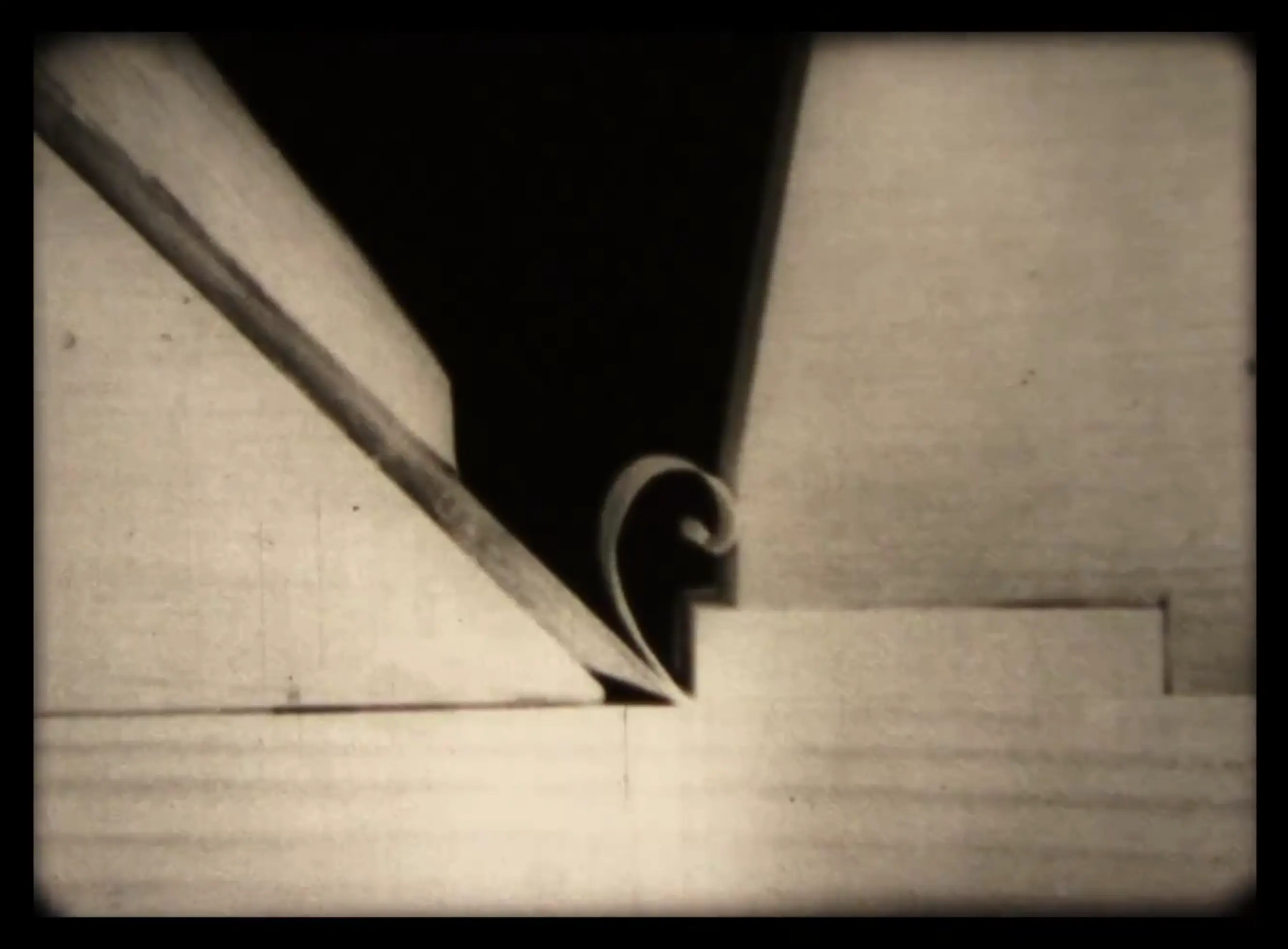
There’s this weird old (German) silent movie with high magnification that shows how a plane creates these shavings I want to share because that kind of stuff just isn’t filmed anymore, it seems:
Being a German instructional film, they show wooden hand planes, not the Stanley Bailey style metal hand planes that were much more popular in the UK and USA.
The principles are the same, the devices just look a bit different. It shows what happens when you …
- … plane with/against the grain;
- … change the mouth opening;
- … add a chip breaker.
Looking at the wood curl, break, slice – I think that’s lovely.
Oh, you’re still reading?
Are you looking for a way to adapt this to programming, for why this is relevant to you on this page?
I didn’t plan that; I just wanted to share this on the web to make the video more widely known because it’s such a gem.
But of course there is be a metaphor for the history of software development. Look at books from the 1970’s and how our current programming paradigms were invented, discovered, and discussed.
What is nowadays discussed as tribal knowledge, and pains everyone seemingly has to go through in their personal programming career, the ancients did sometimes already know about. They discussed the same issues back then, came up with the same solutions, but as an industry, we have forgotten to teach this.
The woodworking film is a modern illustration of a process craftspeople have known about for millennia. For our 4K 140Hz trained eyes, that film itself looks ancient already, even though from the perspective of an ancient Roman woodworker, 2025 and the film’s year of origin in the previous century are basically the same.
Our whole programming art, craft, and practice is like that: moving fast with the tech; but also full of ancient history that material from the 1970’s feels antiquated already because what we use now has such a different shine to it.
But ideas don’t age like that.
The purest of concepts are discovered, not made; they always were there, they were merely inaccessible (because we didn’t have the machinery) or irrelevant (without computers, you don’t only need algorithms of a limited complexity in life in general).
Our craft’s ideas and concepts were discovered so recently that their ancient-feeling original application is discarded for its apparent relative age. 1970’s? That’s 55 years ago; that’s around grandmother age! It smells of old paper and dust.
Don’t discard lessons of (potentially eternal) truth for their apparent age. Remember Euklid.